

Estimated Cost of Radon Mitigation With a Radon Rough-In Already in Place
If your Calgary home already has a radon rough-in, you may be wondering how much it will cost to turn that rough-in into a complete radon mitigation system.
The good news is that an existing radon rough-in can make the installation more straightforward — but having a rough-in does not necessarily mean the home is ready for a fan to simply be connected.
What Is a Radon Rough-In?
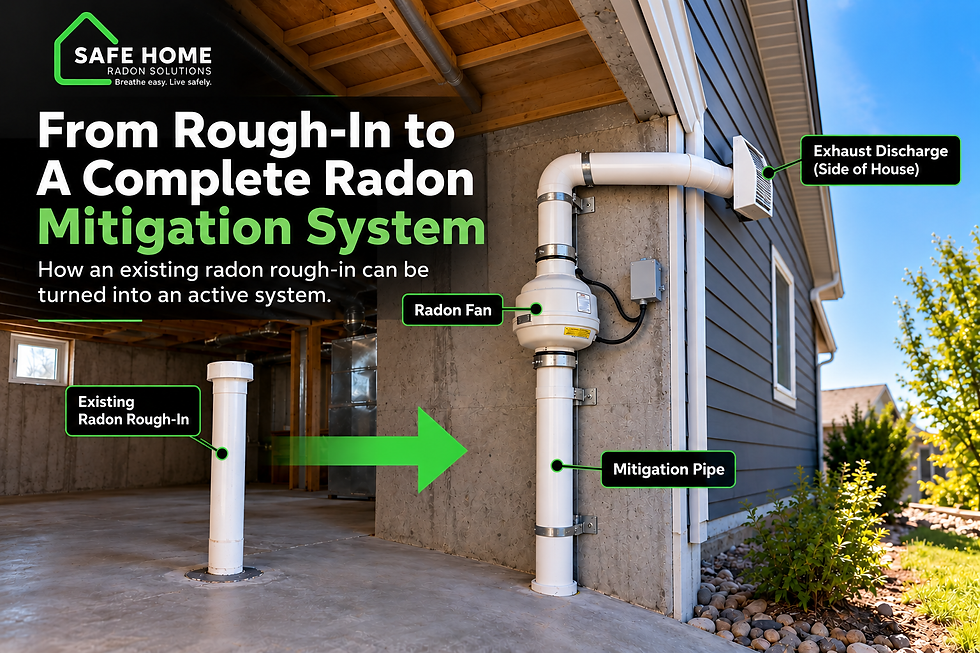
A radon rough-in is typically a capped pipe that connects to the material beneath your basement floor. It is installed during construction so that a radon mitigation system can be added later if testing shows elevated radon levels.
The rough-in itself is not an active mitigation system and generally does not reduce radon levels until it is properly connected to an active system.
How Much Does It Cost to Activate a Radon Rough-In in Calgary?
The cost of radon mitigation in Calgary can vary depending on the home and whether the existing rough-in can be successfully used.
A typical professional radon mitigation system in Canada can cost approximately $2,000–$4,000, while homes with a properly installed and usable radon rough-in may require less work than homes where a new suction point needs to be created.
The final cost will depend on factors such as:
Whether the existing radon rough-in provides adequate airflow beneath the concrete slab
The size and layout of the basement
The type and size of radon fan required
Where the mitigation pipe and fan can be installed
The location of the exterior discharge
Whether additional suction points are required
Sealing requirements around the foundation, sump, cracks and penetrations
Can Every Radon Rough-In Be Used?
Not necessarily.
Before using an existing rough-in, a radon mitigation professional should determine whether it properly communicates with the area beneath the basement slab.
At Safe Home Radon Solutions, we perform diagnostic testing to determine whether the existing rough-in can create sufficient negative pressure beneath the home. This helps us determine the appropriate fan and system design before completing the installation.
If the rough-in does not provide adequate communication beneath the slab, an additional or alternative suction point may be required.
How Does Radon Mitigation Work?
The most common method of reducing radon in Canadian homes is active sub-slab depressurization.
A radon fan creates negative pressure beneath the basement floor, collecting radon and other soil gases before they enter the home. These gases are then safely exhausted outdoors through the mitigation system.
When properly designed and installed, active soil depressurization can reduce radon levels by more than 90% in many homes.
What Radon Level Requires Mitigation?
Health Canada's guideline recommends taking action when the annual average radon concentration in a home exceeds 200 Bq/m³.
However, 200 Bq/m³ should not be viewed as a completely risk-free level. Health Canada recommends reducing radon concentrations to as low as reasonably achievable.
If you have already completed a radon test in Calgary and received an elevated result, the next step is to have your home and existing rough-in assessed by a qualified radon professional.
Radon Mitigation in Calgary & Surrounding Areas
Safe Home Radon Solutions provides professional radon testing and radon mitigation in Calgary, Airdrie, Cochrane, Okotoks, Strathmore and surrounding communities.
If your home already has a radon rough-in, we can assess the existing system, perform diagnostic testing and determine the best way to convert it into an effective active radon mitigation system.
Already have a radon rough-in and high radon levels? Contact Safe Home Radon Solutions for an estimate and find out what is required to reduce the radon levels in your home.


Comments